



 Back to Search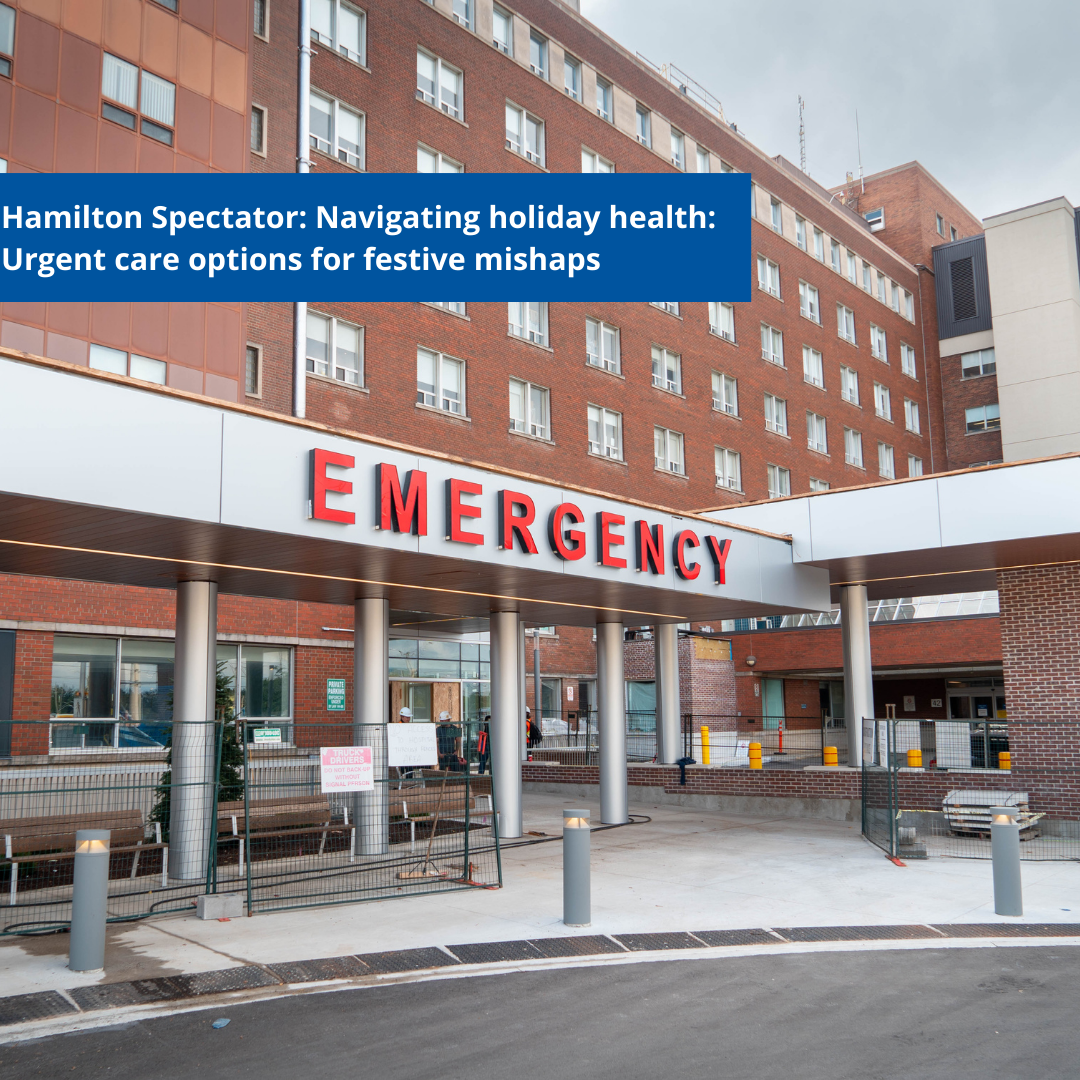
But for non-life-threatening issues like a sore throat, ear infection or prescription renewal, there are quicker options that won’t clog up the emergency department — even over the holidays.
Hospital wait times tend to swell in late December and January, thanks in part to a seasonal cocktail of respiratory viruses, car accidents, falls, broken limbs and the closure of many family doctor practices over the holidays.
On New Year’s Day — the peak of the seasonal surge this year — there was a wait of 14 hours for an initial assessment by a doctor at Brantford General Hospital’s emergency department.
It was an “extreme outlier and not reflective of typical patient experience,” with a more moderate three hours as the average wait seen across the 2024-25 fiscal year, a hospital spokesperson told The Spectator.
But demand skyrocketed at the Willett Urgent Care Centre in Paris last holiday too — on New Year’s Eve, the centre had already reached capacity by noon and had to stop accepting new patients.
It’s why the Brant Community Healthcare System (BCHS) — which oversees both the hospital and the Willett — recommends anyone planning to visit the urgent care centre in late December or January arrive and register “well before posted closing times.”
While the hospital and urgent care may come to mind first on long weekends and holidays, you might have other options.
For example, some pharmacies can now diagnose and prescribe for issues like a urinary tract infection or impetigo.
And St. Joseph’s Healthcare Hamilton offers virtual urgent care for people in southwestern Ontario, including on Christmas and New Year’s Day.
How to plan for holiday health care needs
Before the holidays
-
Find out your primary physician’s holiday hours.
-
Make sure prescriptions are refilled well in advance of the holidays, when primary physicians often take time off.
-
-
If you don’t have a primary care provider, you can make an appointment with an Ontario Health Team.
- They can help with health needs and will also put you on the wait-list for a primary care provider.
During the holidays
- Virtual urgent care
- St. Joseph’s Healthcare Hamilton and Thames Valley Family Health Team offer virtual urgent care for adults, children and youth in southwestern Ontario.
- With a valid OHIP card, you can typically get a same-day virtual appointment with a nurse practitioner to address urgent, but non-life threatening concerns like rashes, skin infections and sinus infections. The service operates over the holidays, including on Christmas Day and New Year’s Day.
-
- The free around-the-clock service connects you with a registered nurse for health advice in non-emergency situations.
-
- Help is available by phone or text around-the-clock for folks who are in crisis.
-
Pharmacists
- Pharmacists can assess and prescribe treatments for some conditions, such as urinary tract infections, pink eye and impetigo. Check holiday hours.
-
The Willett Urgent Care Centre
-
The urgent care centre can treat matters like a sore throat, ear infections, minor asthma, suspected fractures, joint/muscle injuries and other acute, nonemergent needs. It will be open throughout the holidays, including on Christmas Day and New Year’s Day.
-
-
- The emergency department is open 24-7 and should be a first choice for things like fainting, chest pain, choking, stroke symptoms, breathing difficulties and other life-threatening issues.
But worth noting: if someone feels they need the hospital, “I absolutely want them to come without hesitation,” Dr. Somaiah Ahmed, the chief and medical director of emergency medicine at BCHS, told The Spectator.
“We are seeing patients as seamlessly and as quickly as possible, all the while not compromising standards of care,” Cheryl Collins, the clinical director of the emergency department and critical care at BCHS, added.
BCHS has been working to make the emergency department “much more resilient and stable through this Christmas season,” she said, including by bringing on and training new physicians and front-line staff.
Last December, it took the emergency department 80 minutes on average to assume care of patients arriving by ambulance.
As of November 2025, “we’re sitting at just over 30 minutes,” she said.
But the reality is hospital care takes time — even when everything is running smoothly.
“We’ve all been patients, even as nurses and doctors … when we’re waiting, we have no idea what’s happening in another area of care. We are only aware of our immediate environment,” said Ahmed.
To help people understand what’s going on behind the scenes, the team put out a short video explaining the emergency department triage process.
 Subscribe to News