


Urine Culture
| Test Name |
Urine Culture |
|---|---|
| Alternate Name(s) | |
| Laboratory Module |
Microbiology |
| Ordering Mnemonic |
UCS - Urine Culture Screening UCSRM - Urine Culture Screening and Routine and Microscopic Once urine culture is selected as the source of the specimen, a further description can be entered using the source dictionary. For instance: MSU- Mid-stream urine CYSTO- Cystoscopic urine CATH- Catheter urine IN/OUT- In-out catheter urine
|
| Specimen Type |
Urine In core laboratory, if urine is tested and found to be positive for any of the following: blood, leukocytes, protein or nitrites, according to laboratory policy the culture will be ordered by a reflex order rule. According to the laboratory policy pediatric specimens will be sent for culture. In addition all patients under the age of 13 will be sent for culture regardless of the screening findings. Only one sample per day is permitted, all others will be rejected unless approval from the microbiology department is arranged. |
| Collection Container |
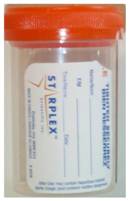
Sterile Container |
| Container Information |
|
| Collection Information |
Clean catch or midstream urine-send first morning voided urine. Do not use disinfectants for cleaning. Female-Thoroughly clean the urethral opening and vaginal vestibule area with soapy water or clean gauze pads soaked with liquid soap. Rinse the area well with sterile water or wet gauze wipes. Hold the labia apart during voiding. Allow a few milliliters of urine to pass. Do not stop the flow. Collect the midstream portion in a sterile container. Male- Cleanse the penis, retract the foreskin (if not circumcised), and wash with soapy water. Rinse the area well with sterile water. Keeping the foreskin retracted, allow a few milliliters of urine to pass. Do not stop the flow. Collect the midstream portion in a sterile container. Ileal Conduit Urine- Remove the external urinary appliance, and discard the urine within. Gently swab and clean the stomal opening with 70% alcohol pad and then with an iodine solution. Remove excess iodine with 70% alcohol after procedure. Using sterile technique, insert a double catheter into the stoma. Catheterize the ileal conduit to a depth beyond the fascial level. Collect the urine drained into a sterile container. Catheter Urine (In/Out)- Prior to catheterization, the patient should force fluids until the bladder is full. Clean the urethral opening (an in females, the vaginal vestibule), with soap and carefully rinse the area with water. Using sterile technique, pass a catheter into the bladder. Collect the initial 15-30ml of urine and discard it from the mouth of the catheter. Collect the remaining sample into a sterile container. Catheter (indwelling)- Clean the catheter collection port with 70% alcohol. Urine sterile technique , puncture the port with a needle attached to a syringe. Aspirate the urine and place it in a sterile container. Do not collect urine from the collection bag. |
| Test Schedule |
Daily |
| Routine Turnaround Time | Preliminary: 24hours Final: 48 hours |
| Stat Turnaround Time | Preliminary: 24 hours Final: 24 hours |
| Reference Interval | |
| Critical Values |
As growth is detected and identified the information is made available to the health care provider. |
| Lab Process Notes |
Mixed bacteria (usually skin, faecal or urogential flora) usually indicate contamination. + Light number or less than 107 organisms/L are usually not significant. ++ Moderate number or between 107 and 108 organisms /L are commonly associated with infection in symptomatic patients. +++ Heavy number or greater than 108 organisms/L are consistent with infection. Susceptibilities will be performed when appropriate. |
| Storage and Transport |
Refrigerate all urine samples until they can be transported quickly to the laboratory. Bacterial counts are not valid, if the specimen has been left at room temperature. Urine specimens are no longer acceptable if the refrigeration time exceeds 24 hours. These specimens will be rejected. |
| Test Referred To |
On-site, BGH Laboratory |