
Chlamydia trachomatis Culture
| Test Name |
Chlamydia trachomatis Culture |
| Alternate Name(s) | |
| Laboratory Module |
Microbiology |
| Ordering Mnemonic | CHYLCULT
|
| Specimen Type |
Once Chlamydia culture is selected as the source, a further description can be entered using the source dictionary. For instance:
Use the free text comment section to define the exact location of where the specimen was obtained from for a more accurate processing of the specimen. For Sexual Assault part of order set /SA *It is imperative that the epithelial layer is sampled. Purulent discharge should be cleaned away from the site before collection. |
| Collection Container |
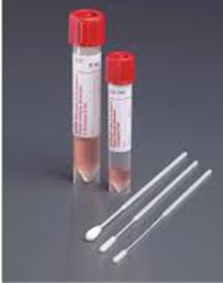
UTM-RT transport media |
| Container Information | UTM Media |
| Collection Information |
Note: Specimens which must be examined by culture include: all specimens for non-genital sites, cases of sexual abuse/assault, all medico-legal specimens from pre-pubertal children, <16 years of age, and test of cure. Specimen transport media can be obtained from the microbiology department of the laboratory. Conjunctiva - Remove purulent exudate if present. Moisten second swab with saline and rotate tip over conjunctival surface.
Fluids should have an equal volume of Chlamydia transport media added to them. Faulty collection and delays in transport are the primary causes of test failure. |
| Test Schedule |
Daily |
| Routine Turnaround Time | Preliminary: 24 hours Final: 1 to 2 weeks |
| Stat Turnaround Time | Preliminary: 24 hours Final: 1 to 2 weeks |
| Critical Values |
As Chlamydia is detected and identified the information is made available to the health care provider. |
| Lab Process Notes | Specimens should be received at the referral laboratory within 48 hours of collection; this is especially important for neonatal and paediatric specimens. In situations of delayed transportation, specimens should be frozen at -70°C and transported on dry ice. Do not freeze sample at -20°C. |
| Storage and Transport |
To maintain optimum viability, the specimen should be stored and transported at 2-8°C for processing within 48 hours of collection. Specimen should be transported to the laboratory as soon as possible after collection. |
| Test Referred To |
Offsite, Referral Laboratory |
Contact Us
The Brantford General
200 Terrace Hill Street
Brantford, ON
N3R 1G9
519-751-5544
The Willett, Paris
238 Grand River St. North
Paris, ON
N3L 2N7
519-442-2251
Support the BCHS Foundation
The BCHS Foundation is committed to raising critical funds to support the top priority needs of the Brantford General Hospital and the Willett Urgent Care Centre.