Critical Care

The Critical Care Unit (CCU) is for critically ill patients facing an immediate life-threatening health condition. CCU uses advanced therapeutic monitoring, diagnostic technology and life-supporting equipment to improve the patient's condition and treat the underlying injury or illness. CCU is an intensivist (a doctor who specializes in treating critically ill patients) led unit, supported by a dedicated team of multidisciplinary professionals.

Did you know?

  • We have 24 beds in the CCU to provide care for critically ill patients.
  • In 2017/18 we had 984 admissions to the CCU.
  • The Critical Care Response Team provides over 500 consultations and 1,000 follow ups each year
  • Through a partnership with Mohawk College, each year we sponsor 5 nurses to receive advanced training.

Personal Support for Patients & Families

Caring for the relatives of critically ill patients is an essential component for the CCU team. Our team focuses on areas that are important so to provide a “personalized” approach in care planning. This assists patients and their familyʼs ability to make decisions, encourages hope and supports the family well-being.

An example of this is our Three Wish Program. This program is designed to bring peace to the final days of a critically ill patientʼs life and ease the grieving of the family. Staff will, in a most sensitive manner; elicit three wishes that are personal and meaningful and then do their best to make it happen.

Example of wishes that have been provided include bringing pets to the hospital, posting family pictures, music, bringing a favourite classic car to the hospital or creating a word cloud to be remembered by.

The word cloud is created with descriptive words that tell the story of the patient, ensuring their legacy endures. At the appropriate time, the framed word cloud and sympathy card are presented to the family from the staff that provided care for their loved one.

Critical Care Response Team

The Critical Care Response Team (CCRT) is comprised of specially trained critical care providers who work with other hospital clinical staff to identify, assess and respond to the needs of seriously ill patients across the hospital. The CCRT brings specialist knowledge and skills from the CCU directly to the patient's bedside.

There are over 20 specially-trained CCU nurses and more than 10 RRTs on the CCRT team. If a patient is transferred from CCU to another unit, that patient is followed at 24 and 48 hours by a member of the CCRT team.

The CCRT is a dynamic group of individuals that make a difference in patient care across the hospital.

Forms

Synchronized Cardioversion helps restore the heart's normal rhythm, treating conditions like atrial fibrillation and atrial flutter.

Sticky pads are placed on the chest, and the patient is given medication to relax. A device then delivers electricity to the heart.
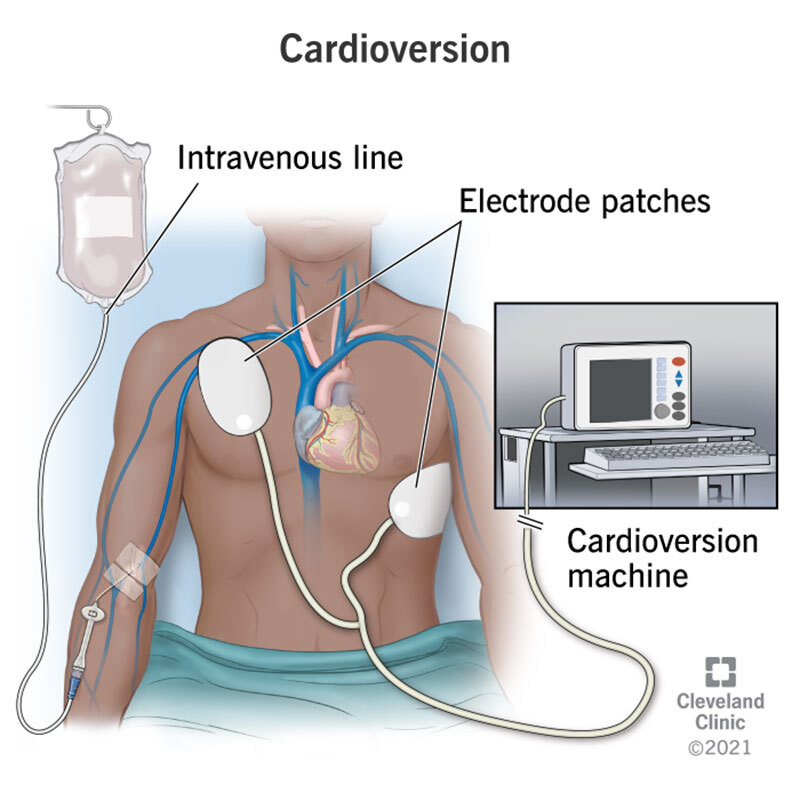
synchronized cardioversion

Prior to the procedure

  • Arrange to have someone take you home when you are discharged – you cannot drive for 24 hours after the procedure.
  • You should have someone with you for the first 24 hours.
  • Do not eat or drink anything after midnight before the procedure.
  • Take your morning medications at 5 am with a small sip of water.
  • Leave your valuables at home and wear comfortable clothing.
  • Expect to remain in the hospital for about 2 hours after the procedure.

What Happens after the procedure?

  • You will feel drowsy- your blood pressure, heart rate, and breathing rate will be monitored, and when it is safe, you will be discharged home with your escort.
  • You may have some redness on your chest where the shock(s) was given.
  • In the rare case of complications, you may require admission to the hospital.
  • You cannot drive, operate heavy machinery, drink any alcohol or make any major legal decisions for 24 hours after sedation.
  • Prior to discharge, the nurse will review and provide you with discharge instructions; if you have any questions, please feel free to ask.
  • For more information, download: patient information sheet and going home after your cardioversion

Support the BCHS Foundation

The BCHS Foundation is committed to raising critical funds to support the top priority needs of the Brantford General Hospital and the Willett Urgent Care Centre.